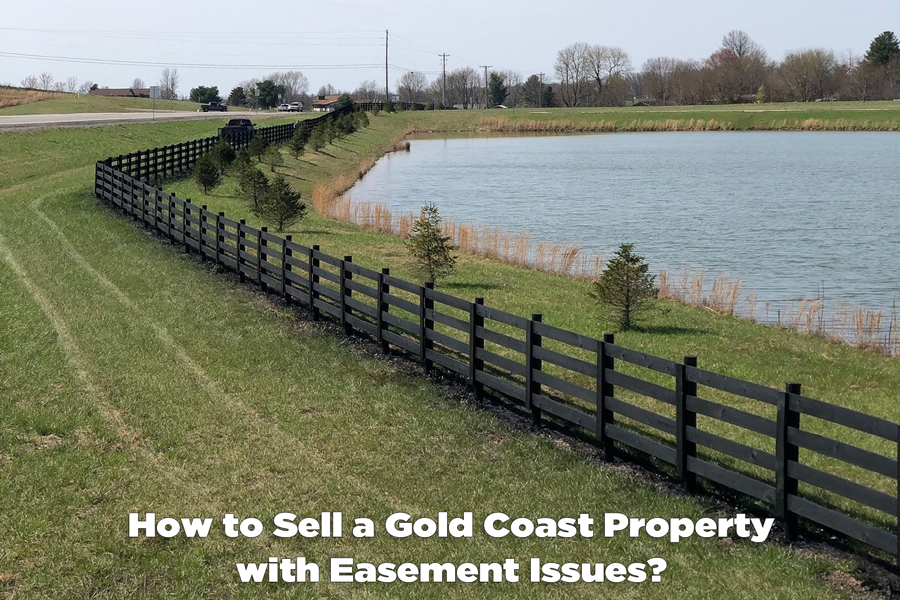
How to Sell a Gold Coast Property with Easement Issues?
When selling a Gold Coast property with easement issues, it’s important to obtain a current title search and fully disclose the easements to potential buyers. Highlight any benefits of the easement and work with an experienced agent and legal advisor to manage negotiations and documentation. Transparency helps build buyer trust and ensures a smoother sale.
How to Navigate Shared Driveways, Access Rights, and Buyer Concerns
Selling a property on the Gold Coast is already a big task, but when your home comes with an easement or shared driveway, things can get complicated fast. Whether you’re in Burleigh Waters with a rear access laneway or in Southport with a stormwater drainage easement, buyers will have questions, and if they don’t get clear answers, they may walk away or demand a steep discount.
In this guide, I’ll walk you through everything you need to know about selling property with shared driveways or easement issues on the Gold Coast: the legal implications, potential buyer objections, and most importantly, how to manage and negotiate these concerns to ensure your sale stays on track.
What is an Easement and Why Should Sellers Care?
An easement is a legal right allowing someone else to use a portion of your land for a specific purpose. The most common ones include:
- Shared driveways: Access for a neighbouring property
- Utility easements: Allowing services like sewerage, power, or drainage
- Right of way: Letting someone cross your land to reach theirs
As a seller, the key issue isn’t just the existence of the easement; it’s how well it’s documented, how clearly it’s explained, and whether it raises red flags for your buyer’s solicitor.
Do Easements Decrease Property Value?
They can. If poorly managed or unclear, easements often:
- Lower buyer confidence
- Spark negotiation on price or sale conditions
- Delay the sale process during due diligence
That said, many homes on the Gold Coast have easements, particularly in older or more tightly packed suburbs. Handled right, they won’t necessarily kill your sale, but transparency is everything.
Legal Risks of Selling a Property with Easement Issues
1. Undisclosed Easements May Void the Sale
If you fail to disclose an easement, especially one that affects access or development potential, the buyer could withdraw from the contract under Queensland’s property disclosure laws.
2. Breach of Contract or Misrepresentation
If an easement is incorrectly described, or you claim a shared driveway is “exclusive” when it’s not, you could be liable for breach of contract or misrepresentation.
3. Obstructed Access or Unlawful Use
If your property blocks or misuses an easement, intentionally or not, it may be non-compliant. This can result in:
- Local council intervention
- Orders to remove structures or restore access
- Fines, or even lawsuits from affected neighbours
What Buyers Are Really Worried About
From a buyer’s perspective, shared or restricted access raises several anxieties:
- Can I renovate or extend near the easement?
- Who’s responsible for driveway maintenance?
- Can my neighbour block access in future?
- Will lenders have a problem with this during settlement?
If you’re not prepared to address these head-on, expect delays or lower offers.
How to Legally Prepare Your Property for Sale
1. Get a Current Title Search and Easement Plan
This document shows the legal footprint of any easements. Buyers will request it during their due diligence. Get it ahead of time to:
- Confirm what’s registered
- Ensure there are no surprises
- Provide clear answers early in the process
2. Review or Create an Easement Agreement (if shared driveway)
If your driveway is shared, a documented agreement outlining:
- Who maintains it
- Who pays for repairs
- Who can use it and when
…can dramatically reduce buyer hesitation. If no formal agreement exists, you may wish to work with your neighbour and a legal advisor to create one.
3. Talk to Your Conveyancer Before Listing
Your legal team can:
- Confirm what must be disclosed
- Help you draft special contract conditions
- Flag any compliance risks
This preparation helps your real estate agent handle objections with confidence.
How to Market the Property Honestly and Confidently
Avoid hiding or downplaying easement-related details. Instead:
- Mention them briefly but clearly in the listing
- Use phrases like “shared driveway with formal access agreement”
- Focus on benefits, e.g., “private rear laneway access” or “peaceful no-through lane”
Highlighting a well-managed easement can actually increase buyer confidence.
Negotiating Buyer Concerns During Contract Phase
Once under contract, the buyer may:
- Request documentation
- Raise concerns about access or development
- Attempt to renegotiate on price or conditions
Tips to Manage This:
- Respond Quickly with Documentation:
Title searches, plans, and agreements should be ready to share. - Don’t Dismiss Their Concerns:
Take a cooperative tone. Buyers are not being difficult—they’re protecting their future. - Lean on Your Agent and Legal Advisor:
Let them frame the conversation professionally. In many cases, buyer fears are worse than the reality. - Be Open to Negotiation:
If the buyer wants to reduce their offer or add contract conditions, weigh it carefully. A $5,000 drop might avoid weeks of delays or a terminated contract.
When the Easement Has Caused Problems Before
Maybe a previous buyer walked away, or neighbours have disputed driveway use in the past. These “soft” issues aren’t always recorded, but are very real.
In such cases:
- Speak openly to your conveyancer about your concerns
- Consider proactive disclosure (even if not legally required)
- Offer buyer protections in the contract (e.g., special conditions)
Transparency builds trust, and trust gets deals done.
Special Case: Unregistered or Informal Access
Some Gold Coast properties, especially older ones, use informal rear lanes or agreements with neighbours. These can be:
- Legal timebombs if not registered
- Red flags to lenders and lawyers
- Fixable, if addressed early
Your Options:
- Work with a lawyer to formally register the access (can take time)
- Obtain neighbour agreement in writing
- Consider a price adjustment to reflect the issue
Selling as is might be possible, but not without transparency.
Council Restrictions, Zoning, and Future Development
Buyers may also want to know how the easement affects:
- Building a pool, garage, or granny flat
- Subdivision or dual occupancy
- Installing fences or landscaping
Encourage them to check with Gold Coast City Council and offer any prior correspondence you’ve had with council about these topics.
Final Tips for a Smooth Sale
- Document everything upfront; title search, plans, agreements
- Disclose clearly and early
- Frame the easement as a feature, not a flaw
- Choose a real estate agent who understands legal complexity
- Have your legal team ready to advise at every step
You Can Still Sell a Property with an Easement, Successfully
Selling a Gold Coast property with shared driveways or easement issues isn’t impossible. In fact, with the proper preparation, it can be a smooth and straightforward process.
The key is to anticipate buyer concerns, present solid documentation, and demonstrate that the easement is not a liability, but rather a known and well-managed part of the property.
Need help selling your Gold Coast home with confidence, even if access or easement issues are in play? Get in touch today for expert guidance that makes the complex feel simple.

THIS IS HOW YOUR JOURNEY TO A SUCCESSFUL GOLD COAST PROPERTY SALE STARTS
My simplified guide below will take you through a 20-step process for selling your property anywhere on the Gold Coast;
I proudly sell homes across the entire coast.

1. PREPARING YOUR GOLD COAST PROPERTY FOR SALE + SOME OF THE LEGAL REQUIREMENTS
- Tidying gardens and decluttering everything inside and out.
- All homes for sale, are legally required to have hardwired photoelectric, interconnected smoke alarms.
Non-removable 10-year battery smoke alarms can be installed as an alternative.
- By law, you are required to complete a pre-contractual seller’s disclosure statement: generally related to limitations, restraints, or defects in the property title, such as easements, covenants, leasing, zoning, etc.
- A pool safety certificate is also required if you have a swimming pool or if the property has a shared swimming pool (Body Corporate).

2. COMPARATIVE MARKET ANALYSIS REPORT FOR YOUR GOLD COAST PROPERTY
After showing me around your property, I will provide you with a Comparative Market Analysis (CMA) report. This is a detailed, legally required analysis of your home’s market value.
The CMA is based on recently sold and for-sale properties similar to yours in the immediate area. I will need to view your home to prepare this report.

3. SETTING A MARKETING BUDGET FOR YOUR GOLD COAST HOME
The third step in selling your home is to create a marketing budget.
By law, this must be based on actual costs.
There are various marketing options to consider, such as:
– Internal, External and Drone Photography.
– Property and House Plans show potential buyers the exact layout of your home and property.
– Internet Advertising on platforms such as RealEstate.com.au, Domain.com.au, Facebook.com, Instagram.com, etc.
– For Sale Sign on the street is still essential to attracting potential buyers. Even though many buyers start their search online, they often drive around neighbourhoods to see what’s available.
A simple fact: Not having a For Sale sign can significantly reduce the number of people who see your property and may be interested in buying it.

4. PREPARING AND APPROVING THE FORM 6 AGREEMENT WHEN SELLING A GOLD COAST PROPERTY
A Form 6 Agreement is a document provided by the Queensland State Government. It outlines all relevant details of the property sale, including the marketing budget.
Our administration team will prepare this form for you and send it for your review and approval.

5. PAYING THE MARKETING BUDGET FOR YOUR GOLD COAST PROPERTY
Once you have approved the Form 6 Agreement, the next step is to pay for the marketing budget that you have chosen.

6. STARTING THE ADVERTISING PROCESS
Once your payment is received, the advertising campaign will commence.
Advertising strategies will align with the choices you made within your marketing budget.

7. MONITORING MARKET RESPONSE
If your property hasn’t received offers within 30 days, don’t assume there’s no interest.
It often means the price isn’t aligned with what buyers are willing to pay at this time.
This is your signal to review and adjust your pricing strategy so your home remains competitive and receives the attention it deserves.

8. ARRANGING BUYER VIEWINGS
When buyers express interest in your property, viewings will be arranged to allow them to see your home in person; you need to be away from the property during these viewings.
This helps potential buyers feel relaxed and visualise themselves as the new owners, thereby forming a deeper connection with your property.

9. CONSIDERING A BUYER’S OFFER
When you receive an offer on your home, it means a buyer is serious and ready to move forward at a certain price.
This is a key moment in your selling journey. Take the time to go over the offer carefully.
Look beyond the price; check the terms, conditions, and settlement timeframes. Make sure it works for you before accepting, countering, or declining.

10. ACCEPT, COUNTER, REJECT
When an offer is presented, you will need to respond by accepting, countering, or rejecting it.
Accepting locks in the agreed-upon price and terms.
Countering proposes changes and initiates further negotiations. If countering, present revised terms clearly; open, respectful communication is key for a smooth sale.
Rejecting means the offer is unacceptable; in this case, respond promptly and professionally, explaining your reasoning for the decision.

11. YOUR LEGALITIES
When you finally accept an offer, you will engage your conveyancer or solicitor to facilitate the legal requirements to complete the sale.
If you are part of a Body Corporate, you will need to provide a Disclosure Statement from them.
Your solicitor will use PEXA to settle your property. Part of the process requires Verification of Identity. Also, anyone selling a property must complete an ATO Clearance Certificate.

12. BUYER’S DEPOSIT
The buyer’s deposit is a crucial step in the property purchase process; it will be held in the agency’s Trust account.
This is a tangible expression of the buyer’s commitment to purchase your property.

13. BUILDING AND PEST INSPECTIONS
Typically, a buyer will arrange for a building and pest inspection report to be completed, usually within 14 days of the contract date.
Additionally, they may have the contract subject to finance, which is generally applicable for 21 days from the contract date.

14. COMPLETING YOUR GOLD COAST PROPERTY SALE
Based on the outcome of the building and pest inspection report, as well as any finance being sought, the buyer will proceed with their offer or withdraw it.
At this point, the sale either falls through or becomes unconditional.

15. LOOKING FOR YOUR NEW PROPERTY
If the sale becomes unconditional, it is time to start looking for a new property. Remember, there is no need to rush.
It is essential that you take your time, as this needs to be a very considered purchase.
Your new home is of substantial value and can be costly if you change your mind. Something you may want to investigate is Short-Term Bridging Loans.

16. ALTERNATIVES YOU SHOULD CONSIDER
An alternative to seriously consider when deciding where to live between selling and buying is renting while you look for a new property.
Renting for a short period gives you breathing room; it allows you time to clear your head, make a confident, considered decision, and ultimately buy where you truly want to live, with no pressure or panic.

17. TIME FOR YOU TO MOVE
Leaving your home opens doors to a new chapter full of new beginnings. Embrace the excitement of a fresh start and cherish the memories you’ve made.
Every box you pack brings you one step closer to a new adventure full of possibilities that lie ahead.

18. YOUR SALE CONCLUDES
The culmination of the property sale is settlement; it marks the transfer of the property to the new buyer.
As the final chapter concludes, this marks a sense of achievement: your property has now SOLD.

19. YOUR FUTURE OPTIONS
If you have chosen to rent, you will continue to look for and eventually purchase a property, apartment, or perhaps even buy land and build; now there’s something to consider.

20. TIME TO UNWIND AND MAKE YOUR NEW HOME YOUR OWN
As you unpack and furnish your new home, embrace the gradual process of creating your haven.
Enjoy the transformation, one room at a time.
Relax in the tranquillity of your surroundings and immerse yourself in the gentle sounds of your new neighbourhood.
Explore the nearby parks and cafes; enjoy the unique charm of your new community.
Remember, settling in is a journey in itself; it’s not a race. Embrace the process of creating a home that reflects your unique style and personality.
Whether you’re downsizing, relocating or just ready to move on, I’ll guide you through every step of selling your Gold Coast home with confidence and ease.
Navigating the intricacies of selling your property can be complex, but it doesn’t have to be.
My 20-step guide provides a simplified general overview; as you would naturally expect, your steps may vary.
Author – Craig Douglas

Are you ready for a conversation about selling your Gold Coast home?
Let’s get you Selling
LET’S GET YOU SOLD
Craig Douglas 0418 189 963
Professional | Knowledgeable | Experienced
You can find me working at a Boutique Real Estate Agency
These are just some of the suburbs that I proudly sell homes in:
Gaven
Please Note: The information contained in this document is for general information purposes only and does not constitute legal advice. The laws and regulations governing the sale of property in Queensland are complex and constantly changing. It is important to seek the advice of a qualified property lawyer or conveyancer before making any decisions about the sale of your property. This document does not take into account your individual circumstances and may not apply to your situation. By reading this document you agree that you have not relied on the information contained herein and that you will seek independent legal advice before taking any action.
This page was proudly created by Craig Douglas, your local independent Gold Coast real estate agent, working for a Boutique Real Estate Agency. Selling residential and commercial properties, from those that are awe-inspiring, through to a diamond-in-the-rough, otherwise known as a “renovator’s delight“.
I negotiate and sell on behalf of property owners who want to get the best possible price, with the least amount of hassle. Let’s talk about the process of selling your property over a coffee to get you started – 0418 189 963