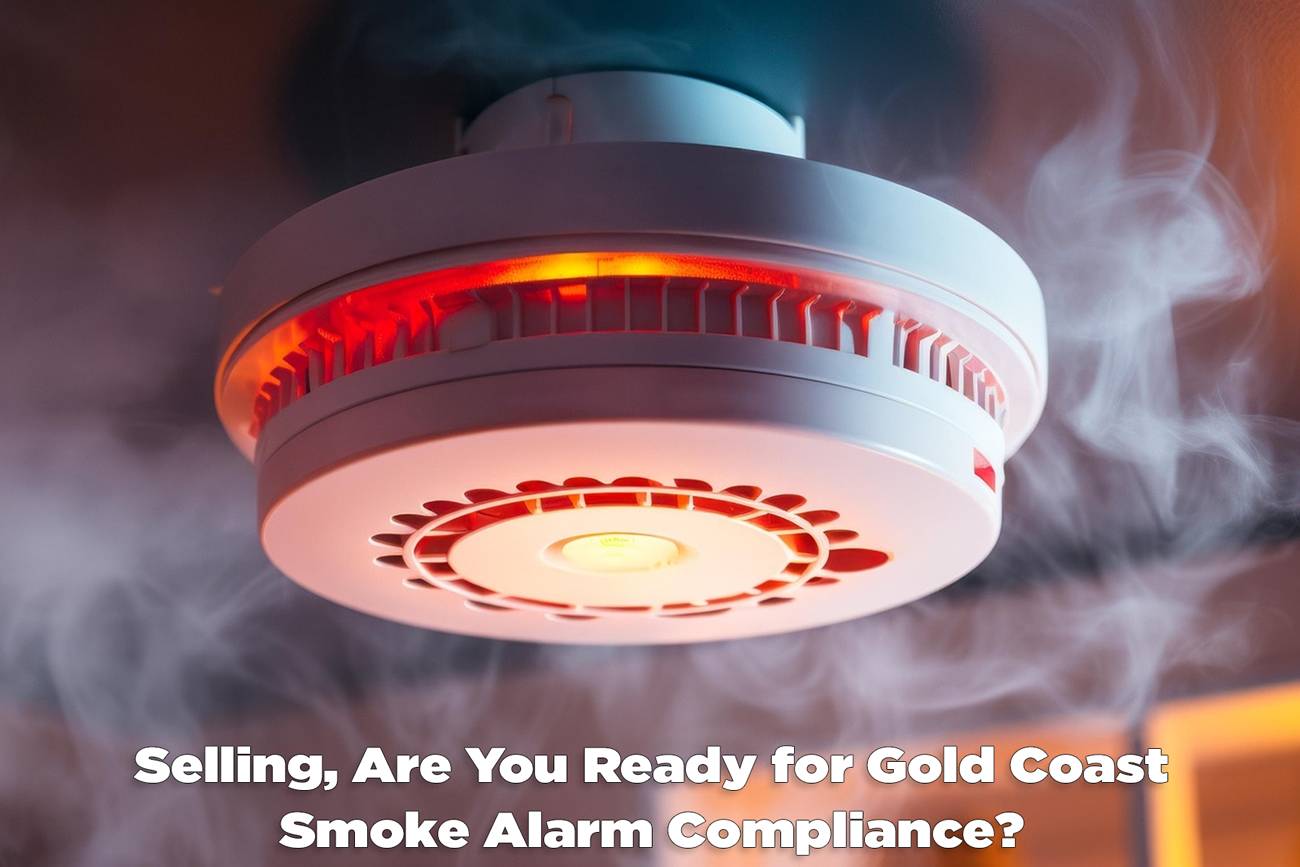
Selling, Are You Ready for Gold Coast Smoke Alarm Compliance?
By 1 January 2027, smoke alarm compliance will become mandatory for all residential properties on the Gold Coast, including homes that are neither for sale nor for rent.
If you’re contemplating selling your Gold Coast home or investment property, understanding smoke alarm compliance isn’t merely a suggestion; it’s a non-negotiable legal requirement with direct implications for your sale’s success, your peace of mind, and your financial outcome.
Queensland’s smoke alarm laws have undergone significant changes. If your property doesn’t meet the updated standards before settlement, you risk serious complications, from delayed sales to contract termination or unexpected financial penalties.
The good news? With clear information and a little forward planning, these headaches are entirely avoidable, ensuring your property is safe, legal, and truly sale-ready.
Navigating Queensland’s Smoke Alarm Legislation for Sellers
Since 1 January 2022, a critical deadline has been in effect for anyone selling residential property in Queensland.
All homes, apartments, and townhouses being sold or leased must be fitted with specific types of smoke alarms, installed in particular locations, and interconnected.
Your ability to achieve a smooth, stress-free sale hinges on meeting these standards.
What Smoke Alarms Must Be Installed Before Selling?
To ensure your property complies with Queensland’s smoke alarm laws upon sale, your system must meet these strict criteria:
- Photoelectric Smoke Alarms Only: Older-style ionisation alarms are no longer permitted for compliance when selling.
All alarms must be photoelectric, as they are more effective at detecting the types of fires that cause the most fatalities. - Compliance with Australian Standard AS 3786-2014: Always check the alarm body for this label to confirm it meets the current Australian Standard.
- Interconnected Alarms: This is a crucial safety feature. If one smoke alarm activates, all other interconnected alarms throughout the property must sound simultaneously, providing an earlier warning to occupants regardless of their location in the home.
- Power Source: Alarms must be powered either by:
- 240V mains power (hardwired) with a battery backup, or
- A 10-year non-removable lithium battery.
Where Must Smoke Alarms Be Installed?
Correct placement is as vital as the type of alarm. To meet the legal standard, smoke alarms must be strategically installed:
- In every bedroom.
- In hallways that connect bedrooms to other parts of the home.
- If there is no hallway, an alarm must be installed between the bedrooms and the rest of the storey.
- On every level of the property, even if that level doesn’t contain bedrooms. For multi-storey homes, this means an alarm on each floor, typically in the exit path.
These comprehensive requirements apply uniformly whether you’re selling a standalone house, an apartment, or a townhouse on the Gold Coast.
The Deadlines That Matter
Queensland’s smoke alarm legislation has a phased rollout. For sellers, the most crucial date has already passed:
- 1 January 2017: New dwellings and substantially renovated homes (for which a building application was submitted) were required to comply first.
- 1 January 2022: This is the critical deadline for all rental properties and any property being sold or leased.
If your contract of sale was signed after this date, your property must be compliant. - 1 January 2027: All other residential homes must comply, even if they are not being sold or rented.
💡 Proactive Tip: Even if you’re not planning to sell immediately, upgrading your smoke alarms now still makes sense.
You’ll need to comply by 2027 anyway, and a fully compliant system can be an attractive value-add for potential buyers who are increasingly aware of these safety standards.
The Risks: What Happens If You Don’t Comply When Selling?
Non-compliant smoke alarms at the point of sale are not just a minor inconvenience; they can lead to significant and costly repercussions:
- Jeopardised Settlement & Contract Cancellation: This is the most significant risk. If your property isn’t compliant by settlement, the buyer legally has grounds to walk away from the contract or demand urgent rectification.
This can cause immense stress, financial loss, and a significant delay to your moving plans. - Financial Penalties & Renegotiation: The buyer could request a 0.15% reduction in the sale price as compensation for the non-compliance.
You may also face demands for urgent rectification of the system, which will be at your expense and potentially more costly if implemented hastily. - QFES Fines: You could be fined up to $800 by Queensland Fire and Emergency Services (QFES) for non-compliance.
- Insurance Issues: If the ‘Form 24 – Smoke Alarm Installation Declaration’ (see below) is incorrect or misleading regarding compliance, you could face severe insurance issues should an incident occur after the sale.
- Reduced Buyer Confidence: Buyers are increasingly savvy about property compliance. Non-compliance can lead them to question the overall condition of your property or your diligence in disclosure, resulting in hesitant offers or tougher negotiations.
Simply put, the risks of non-compliance far outweigh the relatively minor cost and effort of upgrading. It’s genuinely not worth the risk.
Proof of Compliance at Property Settlement
On settlement day, your solicitor plays a key role in confirming compliance. They will need to complete a Form 24 – Smoke Alarm Installation Declaration.
This document includes a declaration confirming that your smoke alarms fully comply with the current Queensland legislation.
If they don’t, as mentioned, the settlement could be delayed, or buyers may demand urgent rectification, all at your expense.
Ensuring this declaration is accurate is paramount for a smooth transfer of ownership.
Getting Your Property Compliant: A Simple Guide
Achieving smoke alarm compliance before selling is usually a straightforward process that offers substantial peace of mind:
- Book a Licensed Professional: Contact a licensed electrician or a specialised smoke alarm compliance service.
They possess the expertise in current regulations and correct installation. - Replace Old Alarms: Have all old or ionisation alarms replaced with new photoelectric models that comply with AS 3786-2014.
- Ensure Interconnection: Confirm that all new alarms are interconnected so they sound simultaneously when one is activated.
- Confirm Correct Placement: The professional will ensure that alarms are correctly positioned in every bedroom, connecting hallway, and on every level of the property, in accordance with legal requirements.
- Test and Document: Ensure each unit is tested, and crucially, keep all receipts, invoices, and any Certificate of Testing and Compliance provided by the installer.
This documentation is vital for your solicitor.
Professional Installation vs. DIY
While trying to minimise costs during a sale is understandable, handling smoke alarm compliance yourself can be a false economy.
Here’s why professional installation is usually the best approach:
- Legal Requirement for Hardwired Alarms: If your property requires 240V mains-powered alarms, these must be installed by a licensed electrician. DIY is not an option for these.
- Proof of Compliance: Licensed installers can provide official documentation, such as a Certificate of Testing and Compliance, which is essential for your solicitor to complete the Form 24 at settlement.
- Avoid Costly Mistakes: Incorrect placement, improper interconnection, or using non-compliant alarm types can render your entire system non-compliant.
Discovering these mistakes just before settlement can lead to expensive, rushed rectifications. - Peace of Mind: Hiring a professional who is up to date on the latest local laws and installation standards provides assurance and legal protection.
As well as eliminating one more item from your pre-sale checklist when time is critical.
Specific Scenarios: Beyond the Standard Home Sale
Selling an Investment Property? Check With Your Tenants
If you’re selling a tenanted property, an additional layer of responsibility applies. As a landlord, you should have already upgraded the smoke alarms to meet the January 1, 2022, deadline for rental properties.
Before selling, ensure:
- The smoke alarms were upgraded to current standards by January 1, 2022.
- They remain in working order and comply with all installation and power supply regulations.
- You have clear records of compliance and maintenance.
This is your ongoing responsibility as a landlord, irrespective of your plans to sell.
Caravan or Motorhome Owner? New Rules Also Apply
Even for recreational vehicles, compliance is expanding. From 1 July 2024, any registered caravan or motorhome being sold or transferred in Queensland must have:
- A photoelectric smoke alarm.
- It must be installed on the ceiling.
- It must be powered by a 10-year non-removable battery.
- If the vehicle includes a sleeping annex, a separate, compliant alarm must also be installed in the annex.
Common Questions from Gold Coast Homeowners
“Do I need to upgrade all alarms, or just replace old ones?”
If your existing alarms are not photoelectric, interconnected, or are not installed in all required locations (every bedroom, hallways, and levels), then yes, you will need to upgrade and replace all non-compliant units and add new ones where necessary.
“How much does it cost?”
The cost varies depending on the size of your home and whether you require hardwired or battery-powered systems.
Many standard 3-bedroom homes can be brought up to full compliance for a few hundred dollars. More complex or multi-level homes, especially those requiring new hardwiring, may incur higher costs.
Obtaining a few quotes from licensed professionals is always recommended.
“How long does it take?”
Most homes can be assessed and upgraded in a single visit by a professional, often taking only a few hours.
However, during peak periods or close to major deadlines, booking an appointment might take longer. Plan ahead!
“Can I sell without upgrading?”
Legally, no. If your contract of sale was signed on or after 1 January 2022, your home must be fully smoke alarm compliant before settlement can legally occur.
Looking for a Reliable Smoke Alarm Brand?
Founded in 2020 and designed by electricians for electricians, Red Smoke Alarms has quickly established itself as a trusted leader in Australian fire safety, with over 1.5 million alarms already installed in homes nationwide.
Now part of the 100% Australian-owned and operated K.P.S Australia Pty Ltd, the brand is renowned for manufacturing Australia’s most reliable and functional photoelectric smoke alarms.
Every alarm undergoes rigorous quality control, is certified to the stringent Australian Standard AS3786:2014, and is backed by a market-leading 10-year warranty.
Whether hardwired or powered by a 10-year lithium battery, Red Smoke Alarms provides homeowners and sellers with exceptional value and the ultimate peace of mind, knowing their properties are protected by a brand that truly prioritises safety and innovation.
Beyond Compliance: A Safer Home is a Stronger Sale
While compliance is a legal obligation, a fully upgraded smoke alarm system offers benefits that extend beyond simply ticking a box.
Buyers on the Gold Coast are increasingly discerning and pay attention to safety and compliance features. A home with modern, compliant smoke alarms signals care, attention to detail, and a responsible homeowner.
It communicates, “This home has been meticulously looked after.” In many instances, sellers who proactively highlight their smoke alarm compliance during property inspections gain an extra layer of trust and confidence from prospective buyers.
This can lead to smoother negotiations, reduced buyer hesitation, and potentially faster, more attractive offers.
Think of it similarly to showcasing newly installed solar panels or updated appliances; it’s not just practical, it’s a tangible selling point that adds value.
What You Can Do Now (Without Committing to Selling)
Unlike some agents who may only raise compliance issues at the last minute, I believe in proactive preparation.
Even if you’re months away from listing your Gold Coast property, taking a few small steps now can significantly ease your future selling process:
- Start a “Property Prep” Folder: Create a digital or physical folder to track any receipts, certificates, and notes related to your smoke alarms and other home upgrades.
- Review Your Current Alarms: Take a few minutes to locate your existing smoke alarms and note their type (photoelectric/ionisation), power source (hardwired/battery), and age.
- Request a No-Obligation Quote: Contact a local licensed electrician or smoke alarm compliance service for a preliminary assessment and quote. There’s no pressure to commit, gather information.
- Envision Your Next Step: Imagine where you might like to move next. Not to make a decision yet, but to get a feel for your future goals.
- Estimate Selling Costs: Start familiarising yourself with the potential costs of selling your property, so there are no surprises later.
Thinking ahead now transforms the selling process from a reactive scramble into a well-managed, smooth transition.
Selling, Are You Ready for Gold Coast Smoke Alarm Compliance?
For further detailed information on Queensland Smoke Alarms, you can visit: https://www.fire.qld.gov.au/prepare/fire/smoke-alarms

THIS IS HOW YOUR JOURNEY TO A SUCCESSFUL GOLD COAST PROPERTY SALE STARTS
My simplified guide below will take you through a 20-step process for selling your property anywhere on the Gold Coast;
I proudly sell homes across the entire coast.

1. PREPARING YOUR GOLD COAST PROPERTY FOR SALE + SOME OF THE LEGAL REQUIREMENTS
- Tidying gardens and decluttering everything inside and out.
- All homes for sale, are legally required to have hardwired photoelectric, interconnected smoke alarms.
Non-removable 10-year battery smoke alarms can be installed as an alternative.
- By law, you are required to complete a pre-contractual seller’s disclosure statement: generally related to limitations, restraints, or defects in the property title, such as easements, covenants, leasing, zoning, etc.
- A pool safety certificate is also required if you have a swimming pool or if the property has a shared swimming pool (Body Corporate).

2. COMPARATIVE MARKET ANALYSIS REPORT FOR YOUR GOLD COAST PROPERTY
After showing me around your property, I will provide you with a Comparative Market Analysis (CMA) report. This is a detailed, legally required analysis of your home’s market value.
The CMA is based on recently sold and for-sale properties similar to yours in the immediate area. I will need to view your home to prepare this report.

3. SETTING A MARKETING BUDGET FOR YOUR GOLD COAST HOME
The third step in selling your home is to create a marketing budget.
By law, this must be based on actual costs.
There are various marketing options to consider, such as:
– Internal, External and Drone Photography.
– Property and House Plans show potential buyers the exact layout of your home and property.
– Internet Advertising on platforms such as RealEstate.com.au, Domain.com.au, Facebook.com, Instagram.com, etc.
– For Sale Sign on the street is still essential to attracting potential buyers. Even though many buyers start their search online, they often drive around neighbourhoods to see what’s available.
A simple fact: Not having a For Sale sign can significantly reduce the number of people who see your property and may be interested in buying it.

4. PREPARING AND APPROVING THE FORM 6 AGREEMENT WHEN SELLING A GOLD COAST PROPERTY
A Form 6 Agreement is a document provided by the Queensland State Government. It outlines all relevant details of the property sale, including the marketing budget.
Our administration team will prepare this form for you and send it for your review and approval.

5. PAYING THE MARKETING BUDGET FOR YOUR GOLD COAST PROPERTY
Once you have approved the Form 6 Agreement, the next step is to pay for the marketing budget that you have chosen.

6. STARTING THE ADVERTISING PROCESS
Once your payment is received, the advertising campaign will commence.
Advertising strategies will align with the choices you made within your marketing budget.

7. MONITORING MARKET RESPONSE
If your property hasn’t received offers within 30 days, don’t assume there’s no interest.
It often means the price isn’t aligned with what buyers are willing to pay at this time.
This is your signal to review and adjust your pricing strategy so your home remains competitive and receives the attention it deserves.

8. ARRANGING BUYER VIEWINGS
When buyers express interest in your property, viewings will be arranged to allow them to see your home in person; you need to be away from the property during these viewings.
This helps potential buyers feel relaxed and visualise themselves as the new owners, thereby forming a deeper connection with your property.

9. CONSIDERING A BUYER’S OFFER
When you receive an offer on your home, it means a buyer is serious and ready to move forward at a certain price.
This is a key moment in your selling journey. Take the time to go over the offer carefully.
Look beyond the price; check the terms, conditions, and settlement timeframes. Make sure it works for you before accepting, countering, or declining.

10. ACCEPT, COUNTER, REJECT
When an offer is presented, you will need to respond by accepting, countering, or rejecting it.
Accepting locks in the agreed-upon price and terms.
Countering proposes changes and initiates further negotiations. If countering, present revised terms clearly; open, respectful communication is key for a smooth sale.
Rejecting means the offer is unacceptable; in this case, respond promptly and professionally, explaining your reasoning for the decision.

11. YOUR LEGALITIES
When you finally accept an offer, you will engage your conveyancer or solicitor to facilitate the legal requirements to complete the sale.
If you are part of a Body Corporate, you will need to provide a Disclosure Statement from them.
Your solicitor will use PEXA to settle your property. Part of the process requires Verification of Identity. Also, anyone selling a property must complete an ATO Clearance Certificate.

12. BUYER’S DEPOSIT
The buyer’s deposit is a crucial step in the property purchase process; it will be held in the agency’s Trust account.
This is a tangible expression of the buyer’s commitment to purchase your property.

13. BUILDING AND PEST INSPECTIONS
Typically, a buyer will arrange for a building and pest inspection report to be completed, usually within 14 days of the contract date.
Additionally, they may have the contract subject to finance, which is generally applicable for 21 days from the contract date.

14. COMPLETING YOUR GOLD COAST PROPERTY SALE
Based on the outcome of the building and pest inspection report, as well as any finance being sought, the buyer will proceed with their offer or withdraw it.
At this point, the sale either falls through or becomes unconditional.

15. LOOKING FOR YOUR NEW PROPERTY
If the sale becomes unconditional, it is time to start looking for a new property. Remember, there is no need to rush.
It is essential that you take your time, as this needs to be a very considered purchase.
Your new home is of substantial value and can be costly if you change your mind. Something you may want to investigate is Short-Term Bridging Loans.

16. ALTERNATIVES YOU SHOULD CONSIDER
An alternative to seriously consider when deciding where to live between selling and buying is renting while you look for a new property.
Renting for a short period gives you breathing room; it allows you time to clear your head, make a confident, considered decision, and ultimately buy where you truly want to live, with no pressure or panic.

17. TIME FOR YOU TO MOVE
Leaving your home opens doors to a new chapter full of new beginnings. Embrace the excitement of a fresh start and cherish the memories you’ve made.
Every box you pack brings you one step closer to a new adventure full of possibilities that lie ahead.

18. YOUR SALE CONCLUDES
The culmination of the property sale is settlement; it marks the transfer of the property to the new buyer.
As the final chapter concludes, this marks a sense of achievement: your property has now SOLD.

19. YOUR FUTURE OPTIONS
If you have chosen to rent, you will continue to look for and eventually purchase a property, apartment, or perhaps even buy land and build; now there’s something to consider.

20. TIME TO UNWIND AND MAKE YOUR NEW HOME YOUR OWN
As you unpack and furnish your new home, embrace the gradual process of creating your haven.
Enjoy the transformation, one room at a time.
Relax in the tranquillity of your surroundings and immerse yourself in the gentle sounds of your new neighbourhood.
Explore the nearby parks and cafes; enjoy the unique charm of your new community.
Remember, settling in is a journey in itself; it’s not a race. Embrace the process of creating a home that reflects your unique style and personality.
Whether you’re downsizing, relocating or just ready to move on, I’ll guide you through every step of selling your Gold Coast home with confidence and ease.
Navigating the intricacies of selling your property can be complex, but it doesn’t have to be.
My 20-step guide provides a simplified general overview; as you would naturally expect, your steps may vary.
Author – Craig Douglas

Are you ready for a conversation about selling your Gold Coast home?
Let’s get you Selling
LET’S GET YOU SOLD
Craig Douglas 0418 189 963
Professional | Knowledgeable | Experienced
You can find me working at a Boutique Real Estate Agency
These are just some of the suburbs that I proudly sell homes in:
Miami Keys
Please Note: The information contained in this document is for general information purposes only and does not constitute legal advice. The laws and regulations governing property sales in Queensland are complex and subject to frequent changes. It is important to seek the advice of a qualified property lawyer or conveyancer before making any decisions about the sale of your property. This document does not take into account your individual circumstances and may not apply to your situation. By reading this document, you agree that you have not relied on the information contained herein and that you will seek independent legal advice before taking any action.
This page was proudly created by Craig Douglas, your local independent Gold Coast real estate agent, working for a Boutique Real Estate Agency. Selling residential and commercial properties, from those that are awe-inspiring, through to a diamond-in-the-rough, otherwise known as a “renovator’s delight“.
I negotiate and sell on behalf of property owners who want to get the best possible price, with the least amount of hassle. Let’s talk about the process of selling your property over a coffee to get you started – 0418 189 963